
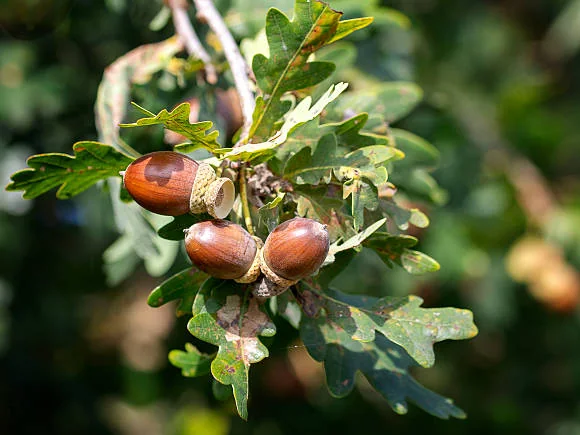
Why acorns deserve a place here
This may be one of the most striking examples of forgotten food.
Every autumn enormous quantities of acorns fall from British oak trees, yet most people no longer think of them as anything except squirrel food.
Acorns contain carbohydrate, fat and other nutrients and can be processed into flour and other foods.
But there is a very important catch.
Raw acorns should not simply be eaten.
They contain high concentrations of tannins, responsible for their intensely astringent, bitter flavour. Those tannins must be leached before the acorns are used as food.
Where to find them
Oak trees grow throughout Britain in woodland, parks, old hedgerows, commons, estates and streets.
Acorns develop during summer and mature in autumn.
Pedunculate oak generally carries acorns on obvious stalks. Sessile oak tends to carry them closer to the twig.
Collect mature brown acorns rather than immature green ones. Discard anything mouldy, obviously rotten, badly damaged or containing signs of insect infestation.
And leave plenty behind. Acorns are an extremely important autumn food for British wildlife.
The essential process: leaching
Shell the acorns and remove obviously damaged kernels. The tannins must then be removed with repeated changes of water.
Cold-water method
- Break or grind the kernels into small pieces.
- Cover completely with cold water.
- When the water becomes brown, discard it and replace it with fresh water.
- Continue changing the water repeatedly until the acorn material has lost its strong bitterness and the water is no longer becoming heavily discoloured.
Cold-water leaching is particularly suited to flour because it retains more of the starch that helps flour bind.
Hot-water method
Coarser or whole kernels can instead be repeatedly treated with hot or boiling water, replacing the water as it darkens. Continue until the tannin-rich brown water clears and the strong astringent bitterness is gone.
Making acorn flour
- Once completely leached, finely grind the moist acorn material.
- Squeeze excess water through muslin or a clean cloth.
- Spread thinly on baking sheets or dehydrator trays.
- Dry at a low temperature until completely dry.
- Grind again into flour.
Store cool and dry; for longer storage the fridge or freezer is sensible because acorns contain fats that can become rancid.
Acorn flour has no gluten, so it behaves differently from wheat flour. For ordinary bread or pancakes, beginners may find it easier to replace only part of the conventional flour with acorn flour rather than using 100%.
Simple demonstration recipe
Acorn pancakes
- 75 g properly processed acorn flour
- 75 g ordinary flour
- 1 egg
- Around 250 ml milk
- Pinch of salt
- Small amount of oil or butter
Mix into a batter, leave briefly to stand, then fry as small pancakes.
The purpose here is not culinary perfection — it is demonstrating that the contents of an autumn woodland floor can genuinely be turned into flour.
Important warning
Never present raw acorns as a snack food. They require proper leaching.
If processed acorn still tastes strongly bitter or mouth-dryingly astringent, assume tannins remain and continue processing rather than eating it.
Do not use mouldy acorns.
People with nut allergies should obviously treat a new nut-based food cautiously.
This is one of the Free Wild Food articles where the preparation instructions are as important as identification.