Choose clean places
Avoid plants immediately beside busy roads, land that may have been sprayed, contaminated ground and areas heavily fouled by dogs or livestock. Wash wild food thoroughly.
Food hiding in plain sight
Britain is full of edible plants that previous generations knew how to recognise and use. Some remain familiar foods. Others are now dismissed as weeds despite once providing vegetables, winter greens, drinks, preserves and even flour.
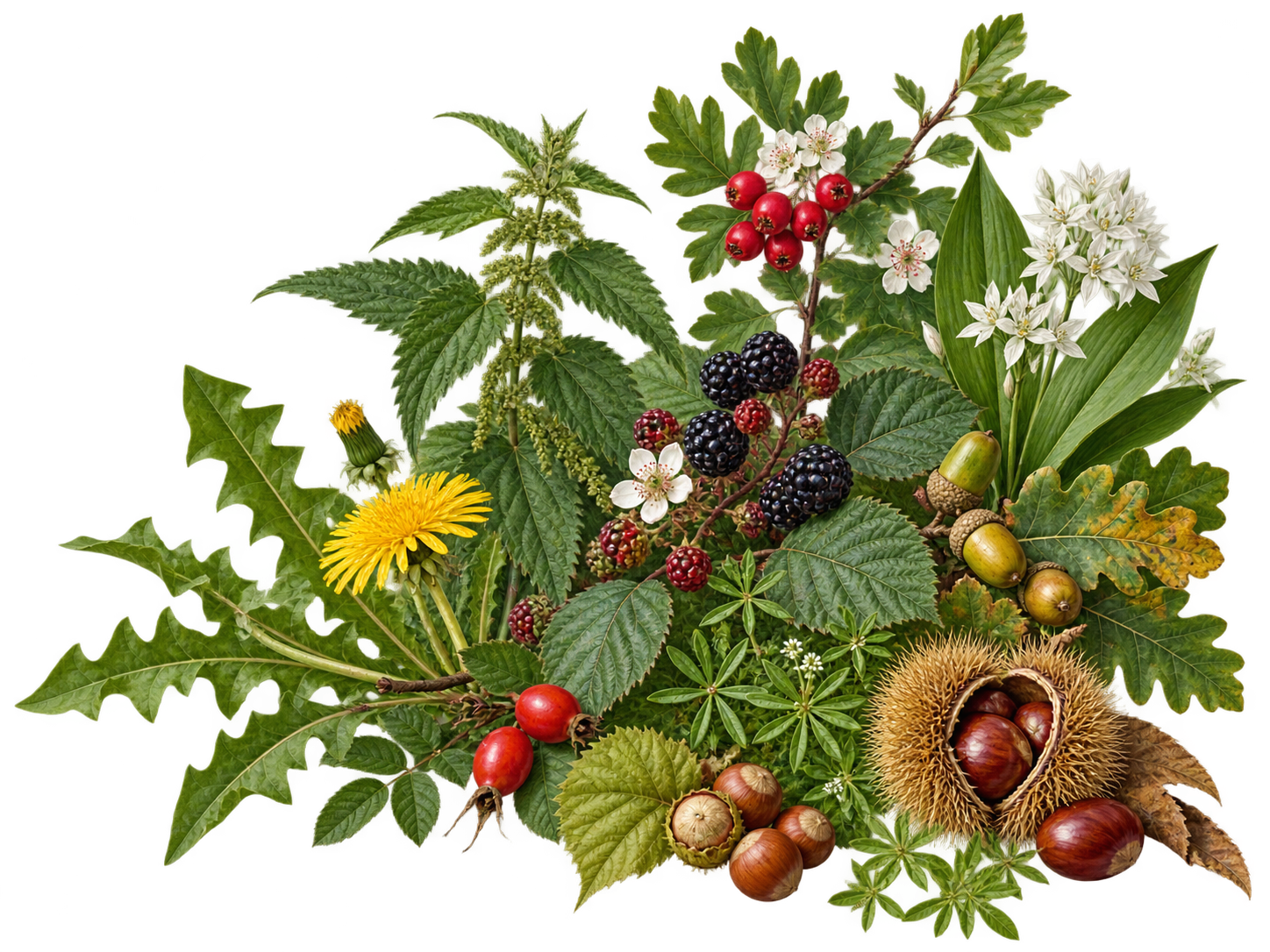
The purpose of this section is not to encourage people to strip the countryside bare. It is to help people recognise some of the abundant food resources growing around them and understand how they have traditionally been used.
Read this first
Never eat a wild plant unless you are completely certain of its identity. Photographs on a website should be treated as a starting point for identification rather than the sole means of identifying something unfamiliar.
Avoid plants immediately beside busy roads, land that may have been sprayed, contaminated ground and areas heavily fouled by dogs or livestock. Wash wild food thoroughly.
Take only a small proportion of what is available and leave plenty for wildlife and for the plant to reproduce. Respect site-specific restrictions.
Intentionally uprooting a wild plant generally requires the permission of the landowner or occupier. Recipes involving roots should normally use your own plants or plants you have explicit permission to dig.
Picking certain wild plant material for personal use is not the same as having a right to enter private land. Local rules, protected species and landowner restrictions still apply.
For personal gathering in England and Wales, the Theft Act provides that picking wild mushrooms, flowers, fruit or foliage is not normally theft unless it is done for reward, sale or another commercial purpose. This does not create a right to enter private land or override wildlife protections and local restrictions.
Start exploring
Choose something you recognise and discover where it grows, what can be used, how people have prepared it and the important cautions to know first.

Free wild food · 1
Taraxacum officinale aggregate
The familiar lawn weed is almost entirely edible — and its roots can even be forced in darkness for tender winter leaves.
Explore this wild food →
Free wild food · 2
Urtica dioica
A free wild spinach hiding behind a formidable defence system: the young tips cook down into soups, greens, fillings and more.
Explore this wild food →
Free wild food · 3
Crataegus monogyna
The classic British hedge offers tender “bread and cheese” leaves in spring and pectin-rich red haws for autumn preserves.
Explore this wild food →
Free wild food · 4
Rubus fruticosus aggregate
Britain’s most familiar wild fruit can become far more than a snack on a walk: jam, jelly, cordial, vinegar and stored winter food.
Explore this wild food →
Free wild food · 5
Quercus robur and Quercus petraea
One of Britain’s most overlooked calorie resources: oak acorns can become usable flour, but only after the tannins have been properly removed.
Explore this wild food →
Free wild food · 6
Rosa canina and other suitable wild or naturalised roses
A vitamin-C-rich hedgerow fruit with a remarkable wartime story — but the irritating hairs around the seeds must be carefully removed.
Explore this wild food →
Free wild food · 7
Corylus avellana
One of the most calorie-dense genuinely wild British foods — assuming you can reach the ripe nuts before the squirrels do.
Explore this wild food →
Free wild food · 8
Allium ursinum
A spring woodland can become an enormous seasonal herb garden — but only if each leaf is identified carefully among dangerous lookalikes.
Explore this wild food →
Free wild food · 9
Castanea sativa
One of Britain’s most substantial wild autumn foods: starchy, naturally sweet nuts that can be roasted, boiled, used in stuffing or ground into flour.
Explore this wild food →
Free wild food · 10
Galium aparine
The sticky hedge plant generations of children have thrown at one another can provide young cooked greens and roasted seeds for a coffee-like drink.
Explore this wild food →The Forgotten Garden idea
The interesting question is not merely “is this plant edible?” It is: what did people know how to do with this resource that most of us have forgotten?
Dandelions can be forced for pale winter salad. Nettles can replace spinach. Hawthorn hedges offer spring leaves and autumn preserves. Acorns can become flour after careful processing. Rosehips once supplemented Britain’s vitamin C supply on a national scale.
That is the thread running through every article in this section.
Future additions
Good future candidates include elderflowers and elderberries, sloes, crab apples, bilberries, wild strawberries, beech mast, common sorrel, mallow and lime-tree leaves.
Fungi will stay separate for now. Mushroom identification carries a very different level of risk and deserves specialist treatment of its own.