
Where to find it
Dandelions must be among the easiest wild foods to find in Britain. They grow in lawns, parks, verges, field edges, gardens, cracks in paving and disturbed ground.
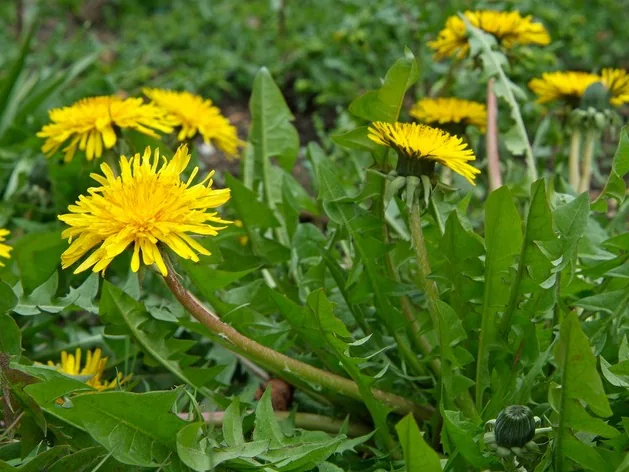
They are perennial plants. A rosette of toothed leaves grows from a substantial taproot, sometimes penetrating surprisingly deeply into the soil. Each flower is carried individually on a hollow, leafless stalk containing white milky latex. The familiar yellow flower eventually becomes the spherical “dandelion clock”.
Several dandelion species occur in Britain, but they share this basic form: a basal rosette, hollow flower stalks, yellow flower heads and the characteristic taproot.
What can be eaten?
Almost the entire plant.
The youngest leaves are the best salad leaves. They have a slightly bitter flavour reminiscent of chicory or rocket. Older, darker leaves become increasingly bitter and are usually better cooked.
Leaves can be wilted like spinach, put into soups, mixed with milder salad leaves or fried gently with butter or oil.
The unopened flower buds can be cooked or pickled and have historically been used rather like capers.
The yellow petals can be used in syrups, jellies, fritters, teas and dandelion wine.
The substantial taproot can be cooked as a root vegetable when young, or dried and roasted to produce a dark drink traditionally used as a caffeine-free coffee substitute.
The really interesting forgotten use: winter forcing
This is perhaps the perfect example of what Free Wild Food is about.
Dandelions store energy in their taproots. If a large root is lifted when dormant and placed somewhere moist, relatively warm and completely dark, the stored energy causes new leaves to emerge.
Without light, the leaves cannot develop their normal deep-green colouring. Instead they become pale, tender and considerably less bitter.
And this is genuinely an old technique. Historic vegetable-growing texts describe lifting dandelion roots during winter and forcing them in the same manner as sea kale — planting roots in boxes in a cellar and covering them so the new growth develops in darkness.
How to force dandelions at home
- Use large, healthy dandelion plants growing on your own property, or obtain permission before digging wild plants.
- Lift the roots in late autumn after the plant has spent the summer building its reserves.
- Remove damaged leaves but leave the crown intact.
- Pack several roots upright into a deep pot, bucket or box containing damp compost, soil or sand. They can be planted comparatively close together because they are being grown for one temporary crop rather than long-term growth.
- Keep the growing medium moist but not sodden.
- Cover the container completely or put it somewhere genuinely dark: a cupboard, cellar, garage or similar frost-free location.
- A little warmth encourages growth. The roots should begin producing pale leaves using energy stored during the previous growing season.
- Harvest the leaves while young and tender.
This can potentially be staggered by keeping some roots cool and bringing a few into warmer conditions at a time.
How to eat forced dandelion
The simplest treatment may be the best: wash the pale leaves, serve them as a winter salad and dress with a little oil, lemon juice, salt and pepper.
Butter, bacon, egg and mustard also pair particularly well with slightly bitter leaves.
Another way to blanch them
If you have dandelions growing in your own garden, you do not necessarily have to lift them. Cover a healthy crown with an upturned plant pot or another opaque container in winter or early spring. New growth produced beneath it will be pale and less bitter. Historical gardening texts describe precisely this kind of treatment.
Warning
Dandelion itself is comparatively beginner-friendly, but never rely purely on the yellow flower. Learn the entire plant.
Older leaves can be very bitter. That is not normally a sign that they are unsafe; it simply makes them considerably less pleasant. Blanching, mixing them with milder leaves or cooking them can reduce the perceived bitterness.
The white latex can also stick to hands and clothing.
Most importantly, do not dig dandelion roots from someone else’s land without permission. Digging the root is uprooting rather than ordinary leaf or flower gathering.