Where to find it
Almost everywhere.
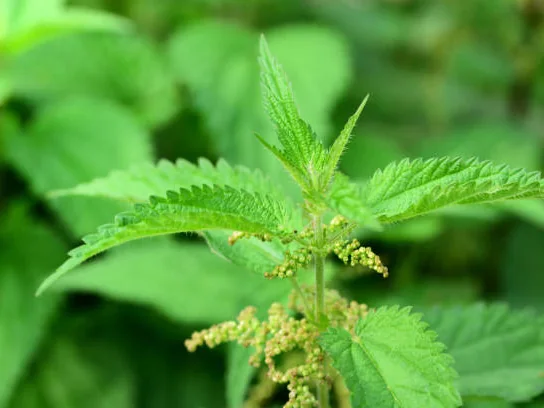
Stinging nettles thrive particularly well in fertile, nitrogen-rich soil. They occur beside hedges, paths, woodland edges, rivers, gardens, waste ground, old farmyards and disturbed places.
They are vigorous perennial plants spreading both through seed and underground rhizomes, which is why a small patch can eventually become an impressive — or infuriating — colony.
Plants can grow to around 2 metres tall in favourable conditions. The leaves are pointed with strongly serrated edges and occur in opposite pairs along the stem. Stinging hairs occur on the leaves and stems.
What can be eaten?
The young growing tips and tender leaves are the useful vegetable.
The flavour once cooked is somewhere between spinach and cabbage, and nettles can essentially be treated as a free wild spinach.
Use them in soups, stews, curries, omelettes, pasta fillings, pesto and anywhere that cooked spinach might otherwise be used.
The best material is usually the upper few leaves of fresh young growth. Older plants become increasingly coarse and fibrous.
Why doesn’t cooked nettle sting?
The sting comes from tiny specialised hairs. Proper cooking wilts the plant and destroys the ability of those hairs to sting effectively.
Until that happens, however, they are still nettles. Gloves are a considerably more elegant harvesting method than repeatedly demonstrating to yourself that yes, they still sting.
Traditional-style recipe
Nettle and potato soup
This is probably the best introductory nettle recipe because the potato softens the flavour and makes a substantial meal.
For roughly four portions
- 80–100 g young nettle tips
- 1 large onion
- 2 medium potatoes
- 1 clove garlic
- Around 850 ml vegetable or chicken stock
- A little butter or oil
- Salt and pepper
- Optional cream or milk
Wearing gloves, wash the nettles thoroughly and remove any tough stems.
Gently fry the chopped onion in butter or oil until soft. Add garlic for the final minute. Add diced potatoes and stock and simmer until the potato is tender. Add the nettles and simmer for around five minutes. Blend until smooth and season. A little cream can be added at the end.
A useful Forgotten Garden experiment
Try substituting nettles for spinach in ordinary family recipes.
A carrier bag full of what most people regard as an irritating weed can become soup, saag-style greens, quiche filling or a vegetable accompaniment.
That is exactly the point of Free Wild Food: not exotic survival food, but ordinary usable food growing for nothing.
Warning
They sting.
Use proper gardening gloves rather than very thin disposable gloves and avoid brushing your wrists and arms through surrounding plants.
Harvest young growth from clean locations. Young material is substantially more pleasant in texture, and many foragers favour nettles before flowering rather than routinely eating coarse mature summer foliage.
Do not eat unprocessed nettle leaves unless you genuinely know how to neutralise the hairs. For a beginner’s guide, cooking them is the sensible recommendation.